React + Ext JS: A Hybrid Approach to UI Architecture
React is designed for:

UI composition component-based Rapid Application Development Tools
However, it lacks:
complex UI components built into data systems
The Challenge
At scale:
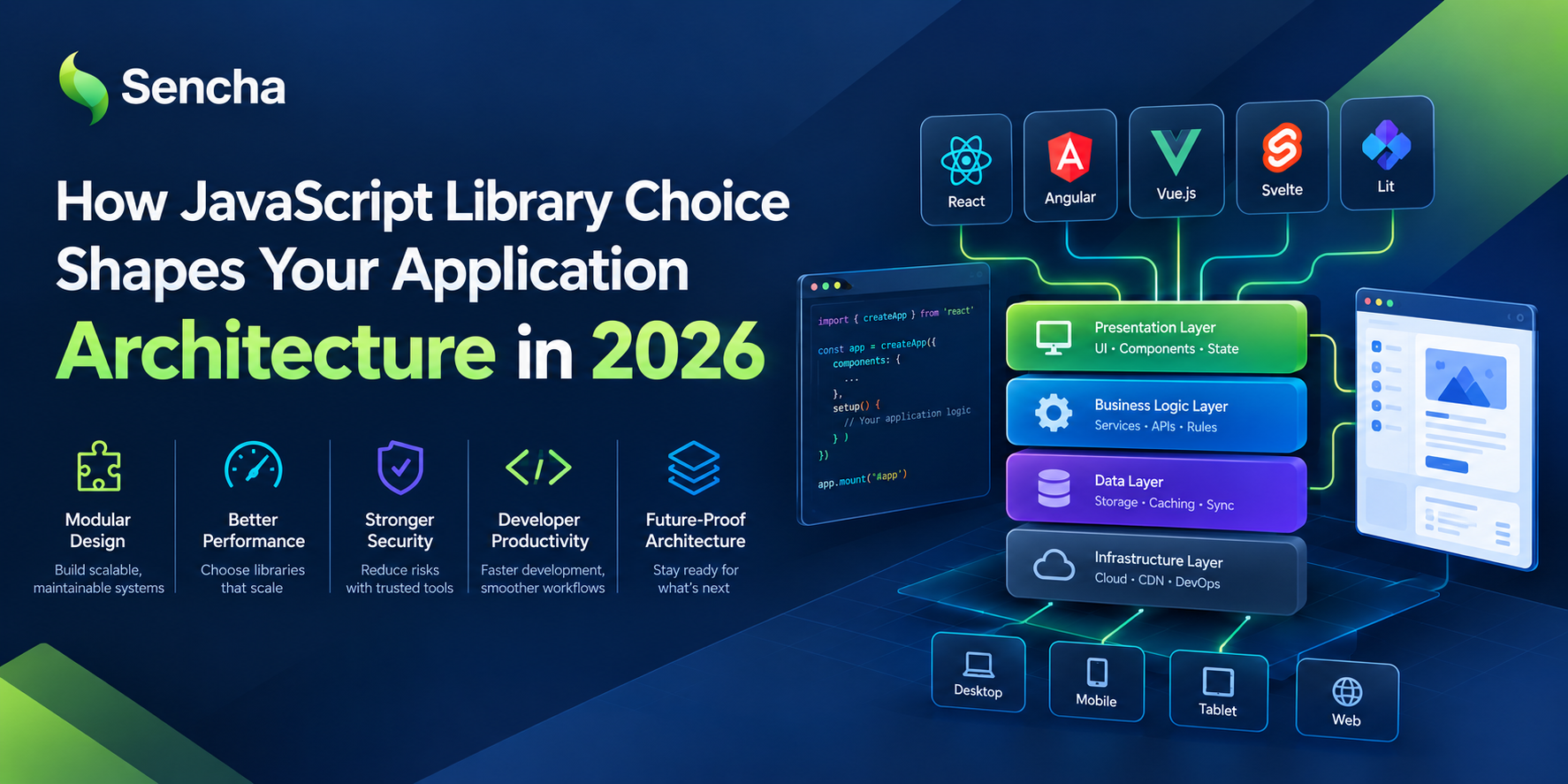
Building grids becomes complex, managing data becomes difficult, and integrating multiple libraries increases overhead
This creates architectural complexity
The Hybrid Model
Ext JS Reactor introduces a hybrid approach:
React → manages app structure Ext JS → renders UI components
coordinated via the integration layer
Key Advantages
- Component Depth
Access to the full Ext JS component library
- Performance
Minimal DOM updates using React diffing
- Flexibility
Use React or Ext JS patterns
- Optimized Builds
Webpack plugin includes only the used components
Constraints: No SSR support requires a build configuration dependency on the Ext JS ecosystem
Enterprise Perspective
Frameworks like Sencha Ext JS provide:
UI + data layer scalable architecture, enterprise-level components
Architectural Insight
This is not about replacing frameworks.
It is about combining strengths
Conclusion
The future of frontend development is not:
single framework dominance
but hybrid architectures